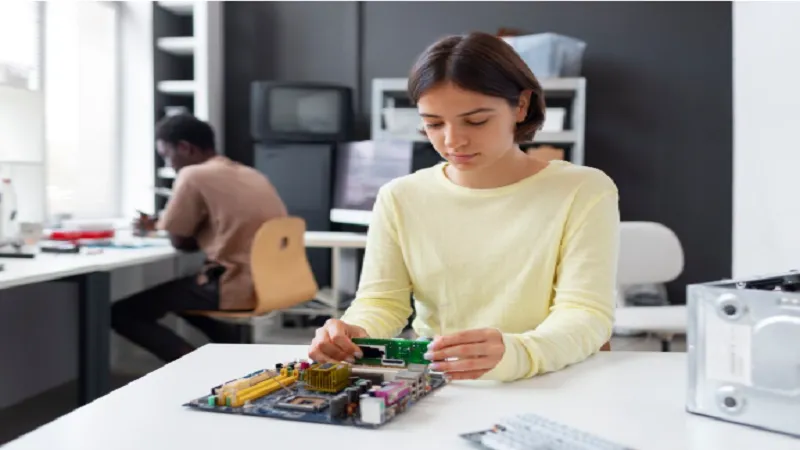
Hardware innovation is moving faster than at any point in history. From the chips that power everyday devices to the machines that build our cities, progress in physical technology is shaping how people live, work, and communicate. The phrase hardware innovations startingblockonline reflects a broader idea: modern hardware is no longer developed in isolation, but influenced by global collaboration, rapid prototyping, and digital-first thinking. This article explores the current landscape of hardware innovation, the key technologies driving change, and the practical guidelines that shape successful development today.
Understanding Hardware Innovation
Hardware innovation refers to the design, improvement, and application of physical components such as processors, sensors, machines, tools, and electronic devices. Unlike software, hardware must deal with real-world constraints like materials, energy use, heat, cost, and durability.
In recent years, hardware has become smarter and more adaptable. Devices now integrate software intelligence, connectivity, and data processing directly into physical components. This blend has made hardware more responsive to user needs while also increasing complexity in design and production.
Key Drivers of Modern Hardware Innovation
1. Advances in Semiconductor Technology
Semiconductors are the foundation of nearly all modern hardware. Smaller, faster, and more energy-efficient chips allow devices to perform complex tasks with minimal power. Innovations such as system-on-a-chip (SoC) designs combine multiple functions into a single unit, reducing size and improving performance.
These advances are critical for smartphones, medical devices, autonomous vehicles, and industrial automation. As chip architectures evolve, hardware becomes more capable without becoming more expensive or power-hungry.
2. Internet of Things (IoT) Integration
IoT has transformed traditional hardware into connected systems. Sensors embedded in machines, appliances, and infrastructure collect data in real time and communicate with other devices.
This connectivity allows hardware to:
-
Monitor performance continuously
-
Predict maintenance needs
-
Adapt to changing environments
From smart homes to agriculture and logistics, IoT-enabled hardware improves efficiency and decision-making across industries.
Manufacturing and Prototyping Breakthroughs
Manufacturing methods have changed dramatically, reducing the barrier to entry for hardware development. Rapid prototyping tools such as 3D printing and computer-aided design allow teams to test ideas quickly and affordably.
In this environment, hardware innovations startingblockonline represents a mindset where ideas move from concept to prototype faster than ever. Designers can experiment, fail, refine, and scale without the long delays that once slowed hardware progress.
Modern manufacturing also emphasizes flexibility. Small production runs, modular designs, and on-demand manufacturing help innovators respond quickly to market feedback.
Artificial Intelligence in Hardware Design
Artificial intelligence is no longer limited to software. AI is increasingly embedded directly into hardware components. Examples include:
-
Edge AI chips that process data locally
-
Smart sensors that adjust behavior automatically
-
Robotics systems that learn from physical interaction
By placing intelligence closer to the hardware layer, devices can respond faster and operate independently of constant cloud connectivity. This is especially important for applications like healthcare monitoring, industrial safety, and autonomous systems.
Sustainability and Energy Efficiency
Sustainability is now a central concern in hardware innovation. Designers must consider not only performance, but also environmental impact across the entire lifecycle of a product.
Key sustainability trends include:
-
Energy-efficient processors
-
Recyclable and biodegradable materials
-
Longer-lasting, repairable designs
In discussions around hardware innovations startingblockonline, sustainability often appears as a guiding principle rather than an afterthought. Efficient hardware reduces operating costs and aligns with global efforts to reduce waste and emissions.
Human-Centered Hardware Design
Successful hardware must be usable, safe, and intuitive. Human-centered design focuses on how people interact with physical products in real environments.
This approach includes:
-
Ergonomic form factors
-
Clear physical feedback and controls
-
Accessibility for diverse users
Hardware that is difficult to use or maintain often fails, regardless of technical sophistication. By prioritizing human needs, innovators ensure that new devices deliver real value.
Security Challenges in Modern Hardware
As hardware becomes more connected, security risks increase. Physical devices can be targets for data theft, sabotage, or misuse.
Modern hardware security strategies include:
-
Secure boot processes
-
Encrypted communication
-
Tamper-resistant components
Building security directly into hardware is more effective than relying on software fixes later. This proactive approach is essential for critical systems such as medical equipment, transportation, and energy infrastructure.
Guidelines for Successful Hardware Innovation
To navigate the complexity of modern hardware development, innovators often follow practical guidelines:
-
Design for scalability
Products should be able to move from prototype to mass production without major redesigns. -
Balance cost and performance
The best hardware solutions meet user needs without unnecessary complexity. -
Test in real-world conditions
Lab performance does not always reflect actual usage environments. -
Plan for updates and longevity
Modular components and firmware updates extend product life. -
Collaborate across disciplines
Effective hardware innovation requires engineers, designers, manufacturers, and end users to work together.
These guidelines help ensure that innovation is sustainable, reliable, and user-focused.
The Role of Education and Skill Development
As hardware systems grow more advanced, the skills required to build them also evolve. Engineers must understand electronics, materials science, software integration, and data analysis.
Learning environments inspired by hardware innovations startingblockonline, often emphasize hands-on experimentation, interdisciplinary learning, and problem-solving. This approach prepares the next generation of innovators to handle complex challenges with confidence.
Future Trends in Hardware Innovation
Looking ahead, several trends are likely to shape the future of hardware:
-
Quantum and neuromorphic computing for specialized tasks
-
Flexible and wearable electronics integrated into daily life
-
Autonomous machines operating with minimal human intervention
-
Localized manufacturing using digital fabrication tools
These developments will further blur the line between physical and digital systems, creating hardware that adapts continuously to its environment.
Conclusion
Hardware innovation is no longer just about building better machines; it is about creating intelligent, sustainable, and human-centered systems. By combining advanced materials, smart design, and responsible guidelines, modern innovators are redefining what hardware can achieve.
The concept of hardware innovations startingblockonline captures this shift toward faster experimentation, broader collaboration, and practical impact. As technology continues to evolve, thoughtful hardware innovation will remain a cornerstone of progress across industries and societies. Explore More